
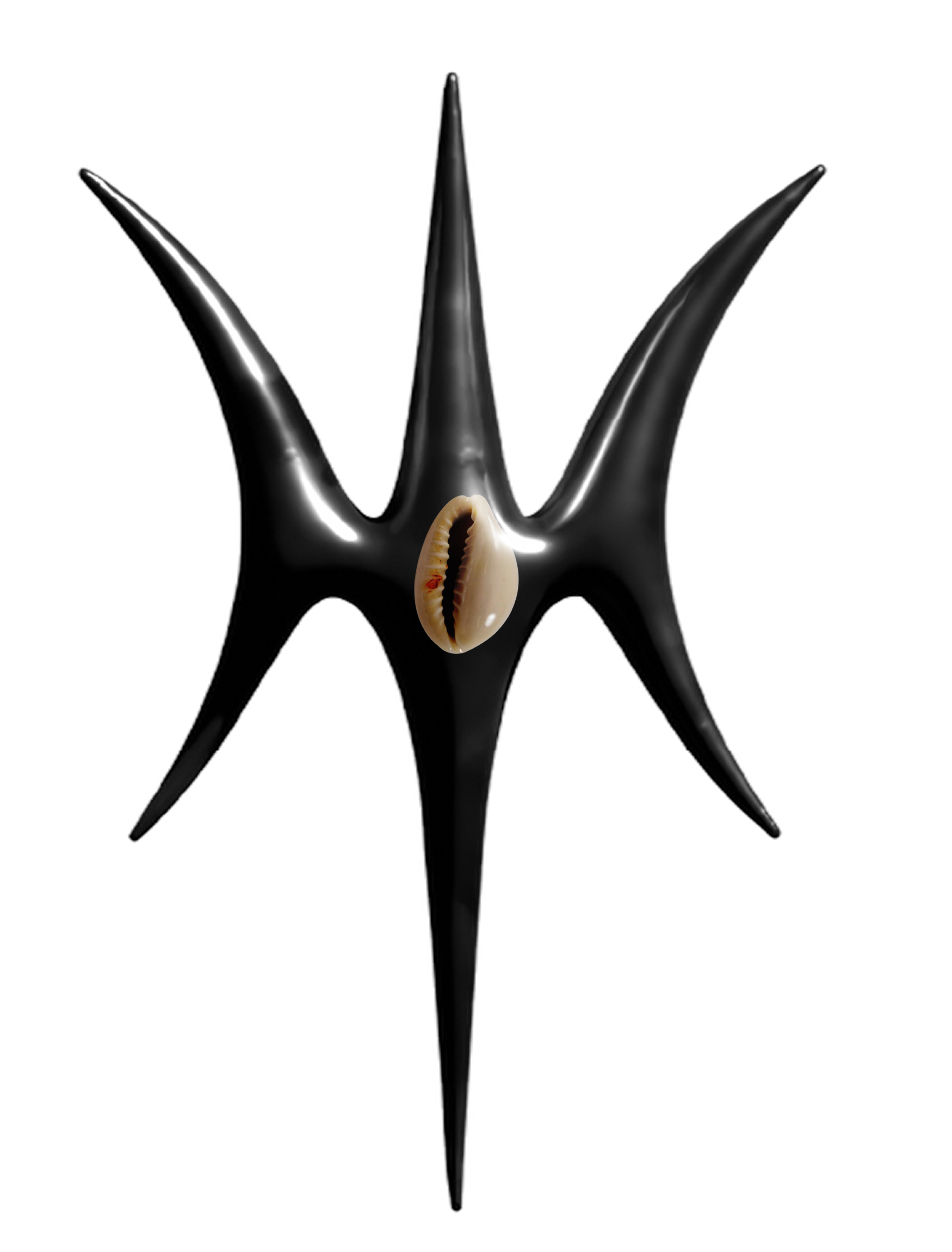
Inherited Futures
INHERITED FUTURES / FROM ORISHA LABS
What if the interruption never happened?
An artistic evolving body of research by Ifedolapo Arolawun, exploring how African spiritual knowledge might shape the technologies, experiences and worlds we build next.
First Installment: Harvard Divinity School Artist Talk
[ 01 / THE BEGINNING ]
It began close to home.
Inherited Futures grew out of two parts of Ife’s life: his work in technology and design, and his place in a long line of cultural practitioners. Designing interfaces meant thinking about how people meet information. His inheritance raised another question: what happens to knowledge carried through people, ritual and memory when the tools shaping our lives have little room for it?
That question became an artistic practice. Inherited Futures brings ancestral practices and esoteric research into conversation with AI, augmented and virtual reality, sonic design and oracle divination. The work asks how these materials might help people encounter African knowledge as something they can engage with in the present.
There is a personal responsibility here, and a wider urgency. Languages, oral histories and ways of understanding the world become harder to reach when their custodians disappear or their meanings are dismissed. The project begins with the desire to return, listen and find ways for that knowledge to keep travelling.
“From disconnected to curiously engaged.”
That is the change Ife wants the work to make possible. A visitor does not need to arrive with specialist knowledge or a settled belief. They need enough curiosity to approach, stay a little longer and ask another question.
[ 02 / THE CENTRAL QUESTION ]
What could have kept evolving?
What would our technologies look like today if indigenous African systems of knowledge had continued developing uninterrupted? What would our cities feel like? What might medicine, architecture, spirituality, communication, governance or our relationship with the natural world have become?
We cannot know. The question gives the work somewhere to begin. It opens a space to examine the possibilities inside what survived, to question what we inherited and to imagine what deserves to travel with us.
Inherited Futures places ancient objects beside contemporary interfaces. These encounters are artistic and research propositions. Each allows the project to ask what a technology values, whose knowledge it carries and what kind of relationship it invites.
Remembering becomes a practice.
The work follows a cycle: return to inherited knowledge, study and translate it, make an encounter, then ask what that encounter changes. A visitor’s recognition can become curiosity; curiosity can lead to renewed engagement with people, places and practices. What they carry forward becomes part of somebody else’s inheritance.
This is what “Remember Forward” means within the project. Receiving an inheritance leaves room to question it, improve it, remix it and build with it. The future takes shape through those choices.
[ 03 / WORK SO FAR ]
The question has started making things.
The project has developed through writing, prototyping and conversations with others. These strands are at different stages: there are works you can already see, prototypes being refined and larger experiences still being planned.
RESEARCH / DRAFTED
A thesis and an exhibition framework
A research thesis and digital exhibition manifesto establish the project’s argument: remembrance, participation and the responsibility of translating cultural knowledge. Curatorial work has also shaped the visitor’s journey, beginning with The Veil and moving towards encounter and reflection.
MAKING / PROTOTYPES
Bodies, objects and moving images
Agba has taken visual form in a beta prototype of the Ancestors' Crypt. The Ọpọ́n Ifá has become an interactive star gate into other realms. An Ife-inspired bronze portrait study has progressed from a camera-based ASCII experiment into sculptural pixel rendering, with facial tracking and relief explored in later versions. Films and esoteric object studies are developing the wider visual language.
These are working studies. They are how the research tests its questions through form, movement and participation.
Explore AgbaPUBLIC CONVERSATION / PRESENTED
Work in progress at Vision Labs
Ife has presented Inherited Futures to scholarly peers through Vision Labs. Sharing the work in progress created a place for questions, critique and conversations about how the project might continue.
PUBLIC CONVERSATION / ACCEPTED
Harvard PES 2026 artist talk
Inherited Futures has been accepted for an artist talk at Harvard PES 2026. It is a milestone for sharing the artistic inquiry while the exhibition and its digital manifestation continue to develop.
ARCHIVE / RESEARCH EDITION 01
An Archive of Concepts Driving the Artistic Research
The archive brings together 100 Yorùbá concepts, practices and material interfaces. Explore documented inheritance, editorial interpretations and speculative futures through four views, with linked sources, visible evidence states and a constellation of related records. This first edition is a desk-research collection; practitioner review and further fieldwork remain ongoing.
Explore the full archive[ 04 / THE NEXT CHAPTER ]
An exhibition with a life beyond the room.
The physical encounter
The exhibition is being conceived as a passage. The Veil is its entrance: an environment of layered space, light and sound that lets the visitor leave the pace and assumptions of the outside world behind. Beyond it, the proposed journey moves through fragments of memory, an encounter with Agba and participatory works before returning the visitor to their own questions.
The intention is to make attention matter. Staying still, approaching an object, listening or choosing to take part could change what becomes available. The next stage is to test how these ideas work with actual bodies, rooms and audiences.
A digital manifestation
The digital plan gives the project a home people can return to from elsewhere. It brings together the archive, interactive artworks, moving images and spaces for reflection. The archive has four ways in: Archive for the record, System for the relationships and workings beneath it, Future for speculative possibilities, and Constellation for connections across the collection.
There is room for the work to grow into educational resources, public programmes, digital tools and further exhibitions. Those possibilities will develop through the research and the people who choose to build with it.
How the work moves forward matters.
The continuing research asks who has the authority to share particular knowledge, what should remain private, how practitioners should participate and how their contributions should be credited. Historical documentation, lived practice, artistic speculation and AI-generated interpretation need to remain distinguishable. These questions shape the work itself.
The next phase calls for cultural practitioners, researchers, artists, technologists and partners willing to help test, support and sustain the project. It is an invitation to participate in what African knowledge might make possible next.